 ← Articles
Nutrition is how food and drink provide the energy and substances your body needs to function, grow and repair itself. Good nutrition comes from an overall eating pattern that meets your needs over time.
Carbohydrates provide a major source of energy. Protein supports growth and tissue repair. Fats supply energy and help with essential body functions. Vitamins and minerals support many processes, from bones to blood. Water is necessary for normal function. Fibre, found in plant foods, supports digestion and is another important part of the picture.
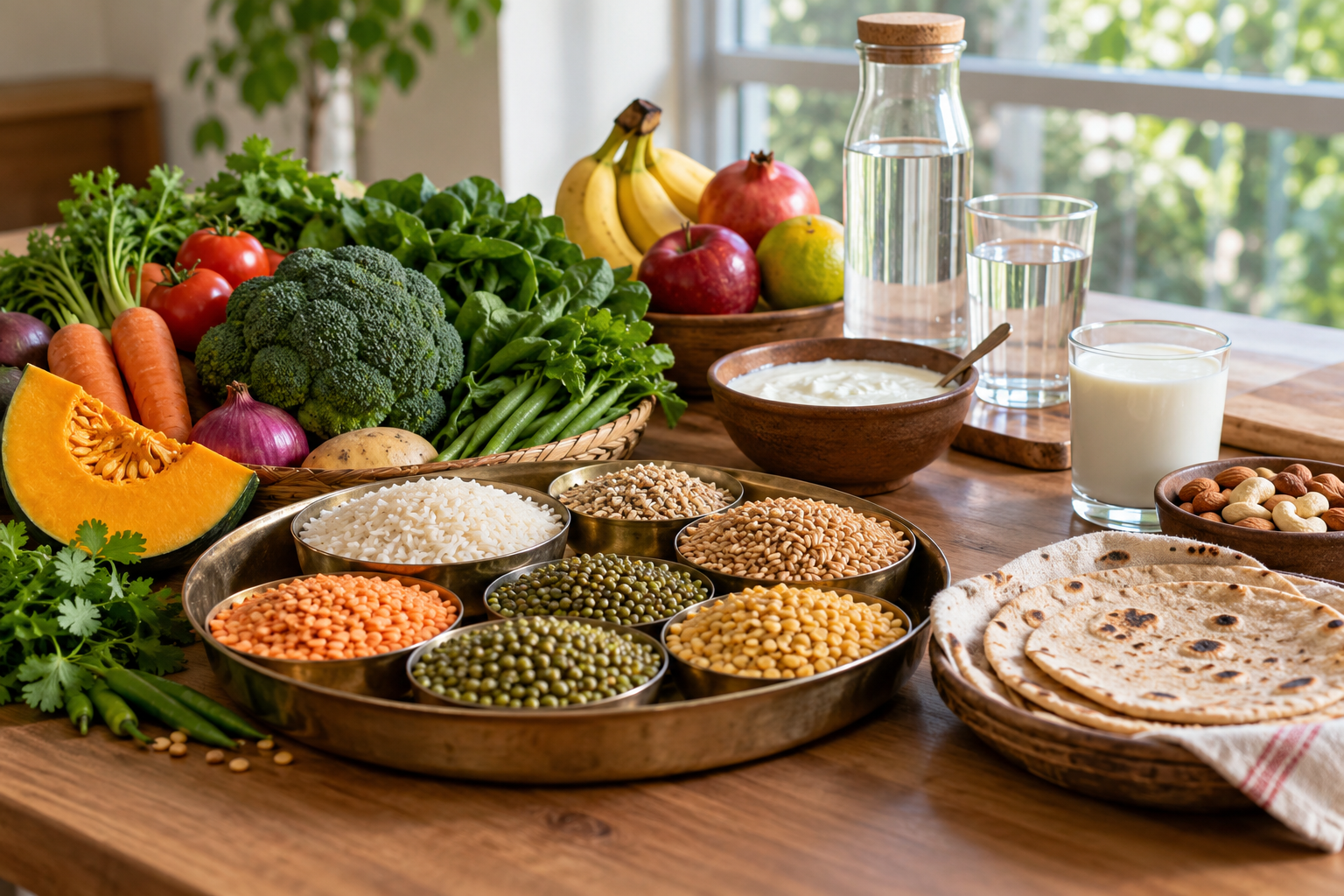
Rice and roti mainly supply carbohydrate. Dal, beans, eggs, dairy and soy foods add protein. Nuts, seeds and oils provide fats. Vegetables and fruit add fibre, vitamins and minerals. Most foods contain more than one nutrient: dal also has carbohydrate and fibre, for example.
Calories describe food energy, but they do not tell the whole story. A meal’s protein, fibre, vitamins and overall variety matter too. Portion sizes still matter because energy needs differ from person to person.
Build meals from several food groups: a staple, a protein food, vegetables or fruit, and water. Try dal, roti, sabzi and curd; or eggs, toast and fruit. Rotate choices through the week. Limit excess sugar and salt, and choose mostly minimally processed foods when practical.
Age, pregnancy, health conditions and activity change nutrition needs. General guides are a starting point; a qualified professional can tailor advice when needed. Explore our body fuel guide and healthy eating guide next.
WHO: healthy diet · ICMR-NIN Dietary Guidelines for Indians
This article provides general education and does not replace individual medical or dietetic advice.
← All articles