 ← Articles
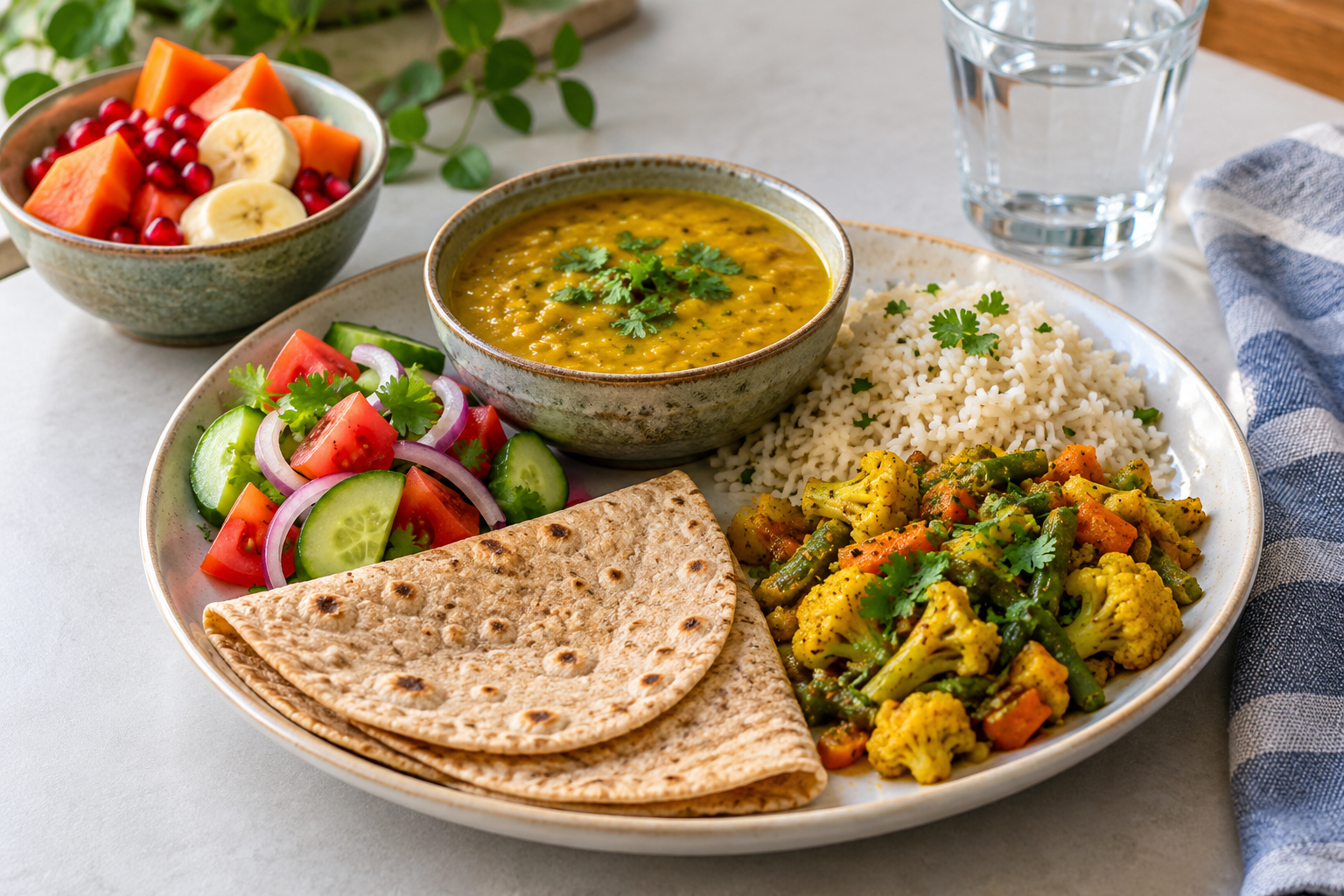
A healthy diet is a pattern of varied foods you can maintain. No single food makes a diet healthy. Begin with ordinary meals that provide vegetables or fruit, whole grains or other staples, and protein foods.
Eat a variety of vegetables and fruit across the week. Choose grains such as roti, rice, oats or millets, with whole-grain choices often. Add pulses, beans, eggs, dairy, tofu, fish or other protein foods according to your preferences. Nuts and seeds can add texture and nutrients in modest portions.
A simple lunch can be dal, rice, sabzi and curd. Another option is roti, chana, salad and fruit. You can vary the amounts based on appetite, activity and health needs. If a meal is mainly rice or roti, add a protein food and a vegetable rather than removing the staple entirely.
Food is the starting point, but some people need supplements for diagnosed deficiencies or life stages. Avoid guessing from symptoms alone. A clinician or registered dietitian can assess your needs, including pregnancy, vegan diets or chronic illness.
Breakfast could be idli with sambar or eggs with toast and fruit. Lunch might be roti, rajma and vegetables. A snack could be curd and fruit. Dinner could be khichdi with vegetables and a protein-rich side. Use the foods available to you; consistency matters more than a perfect menu.
WHO India: healthy diet · ICMR-NIN Dietary Guidelines for Indians · Green vegetables guide
This article provides general education and does not replace individual medical or dietetic advice.
← All articles