 ← Articles
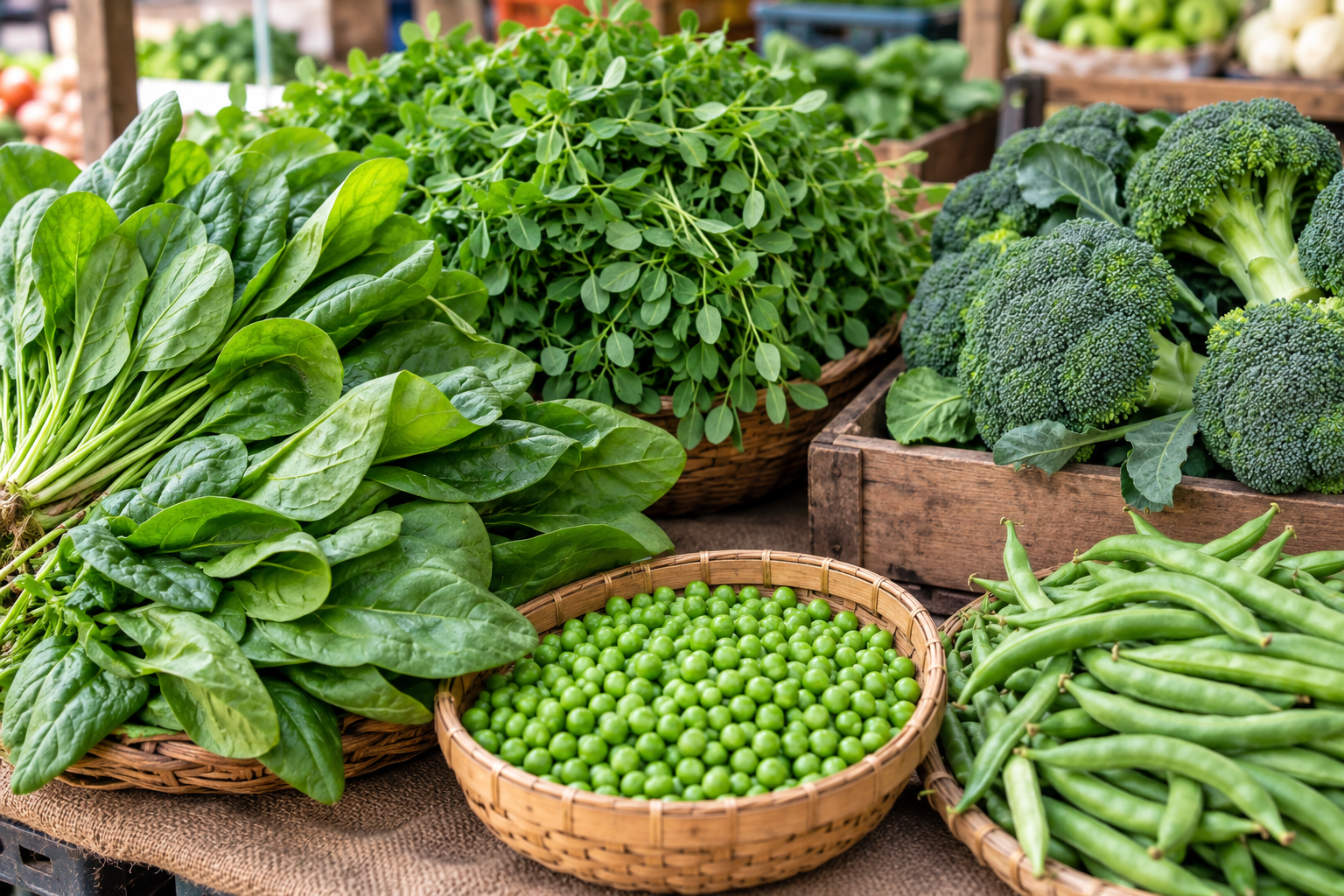
Green vegetables bring variety, fibre and useful vitamins and minerals to a meal. Palak, methi, beans, peas, broccoli and other greens do not have identical nutrients, so rotate them rather than looking for one “best” vegetable.
Vegetables can contribute fibre, folate, potassium and vitamins A and C; the amounts depend on the vegetable and preparation. Fibre helps make meals satisfying and supports digestive health. Greens are part of an overall varied diet, not a substitute for protein foods or grains.
Palak, methi, amaranth and mustard greens are leafy options. Green beans, peas, capsicum, broccoli and okra add different textures and nutrients. Peas also supply some protein and carbohydrate. Choose what is affordable, seasonal and enjoyable.
Fresh and frozen vegetables both count. Wash fresh produce well, store it safely and cook leafy vegetables as needed. Use a modest amount of oil and avoid cooking until everything is mushy if you prefer a firmer texture. A squeeze of lemon can add flavour.
The World Health Organization recommends at least 400 g of fruit and vegetables a day for people older than 10 years, with lower age-specific amounts for younger children. It is a combined total, not a target for green vegetables alone. Start by adding one vegetable to a meal and build from there.
USDA MyPlate: vegetables · WHO: healthy diet · Healthy Indian eating guide
This article provides general education and does not replace individual medical or dietetic advice.
← All articles