 ← Articles
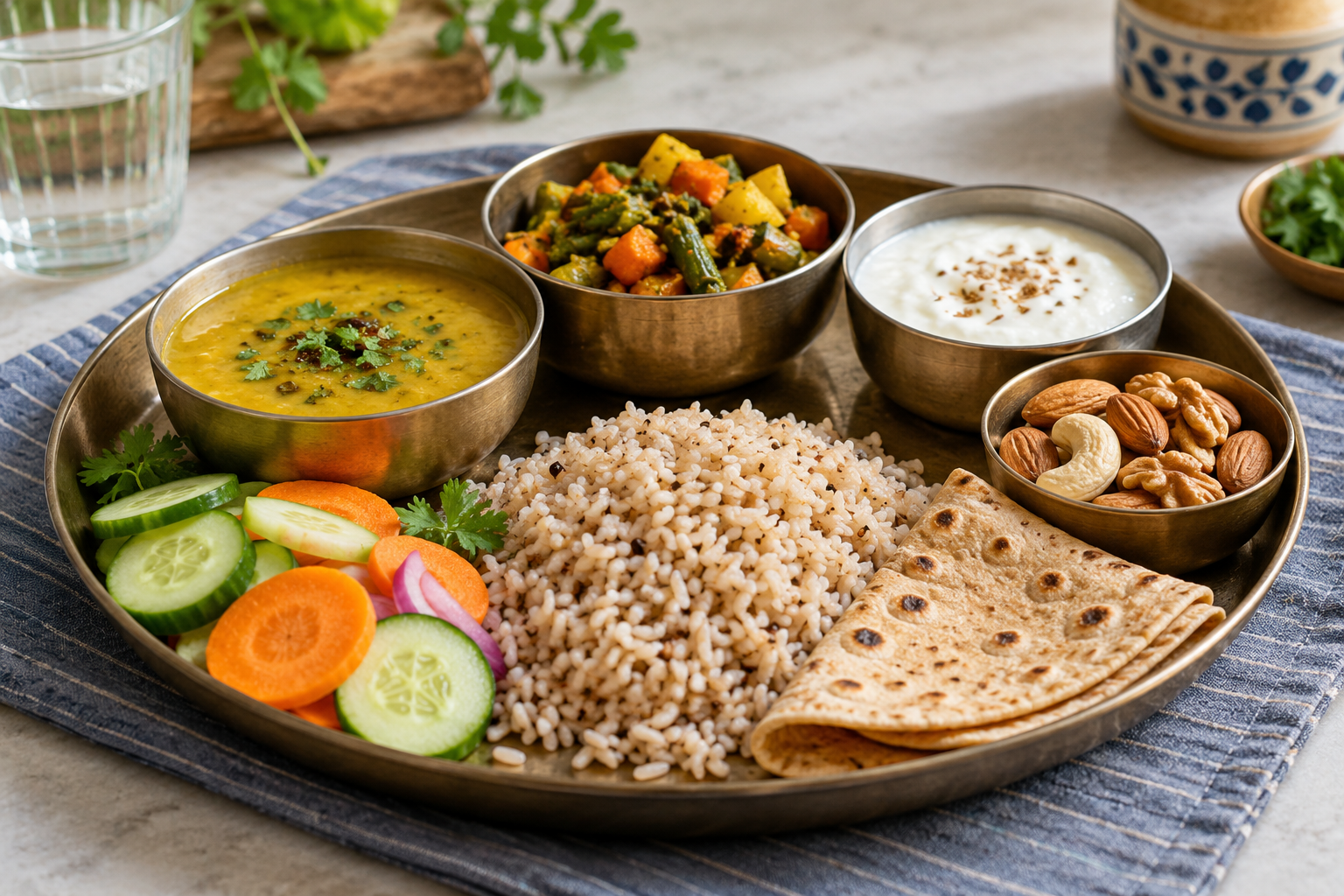
Your body needs energy to move and think, protein to build and repair tissues, fats for essential functions, and vitamins, minerals and water to keep systems working. A mix of foods covers these jobs better than one “power food.”
Rice, roti, oats, millets, potatoes, fruit and beans supply carbohydrate. Whole grains, pulses, fruit and vegetables also bring fibre and other nutrients. You do not need to avoid carbohydrates to eat well.
Dal, chana, rajma, soy foods, milk, curd, eggs, fish and meat are protein options. Include a protein source in meals according to your needs and preferences. See our daily protein guide for more detail.
Nuts, seeds and cooking oils provide fats and energy. Use amounts that fit your overall diet, and vary sources. Ghee and butter can add flavour, but large amounts quickly add energy.
Vegetables, fruit, pulses, dairy and other varied foods provide vitamins and minerals. Water helps normal body functions, and needs change with heat, activity and individual health. Drink to thirst and follow personal medical advice if you have fluid restrictions.
A bowl of dal, rice, cooked greens and curd combines energy, protein and micronutrients. A roti with paneer or tofu and vegetables works too. Portions depend on your age, activity, appetite and health. The goal is variety across the day, not a perfect formula at every meal.
WHO: healthy diet · ICMR-NIN Dietary Guidelines for Indians · What is nutrition?
This article provides general education and does not replace individual medical or dietetic advice.
← All articles