 ← Articles
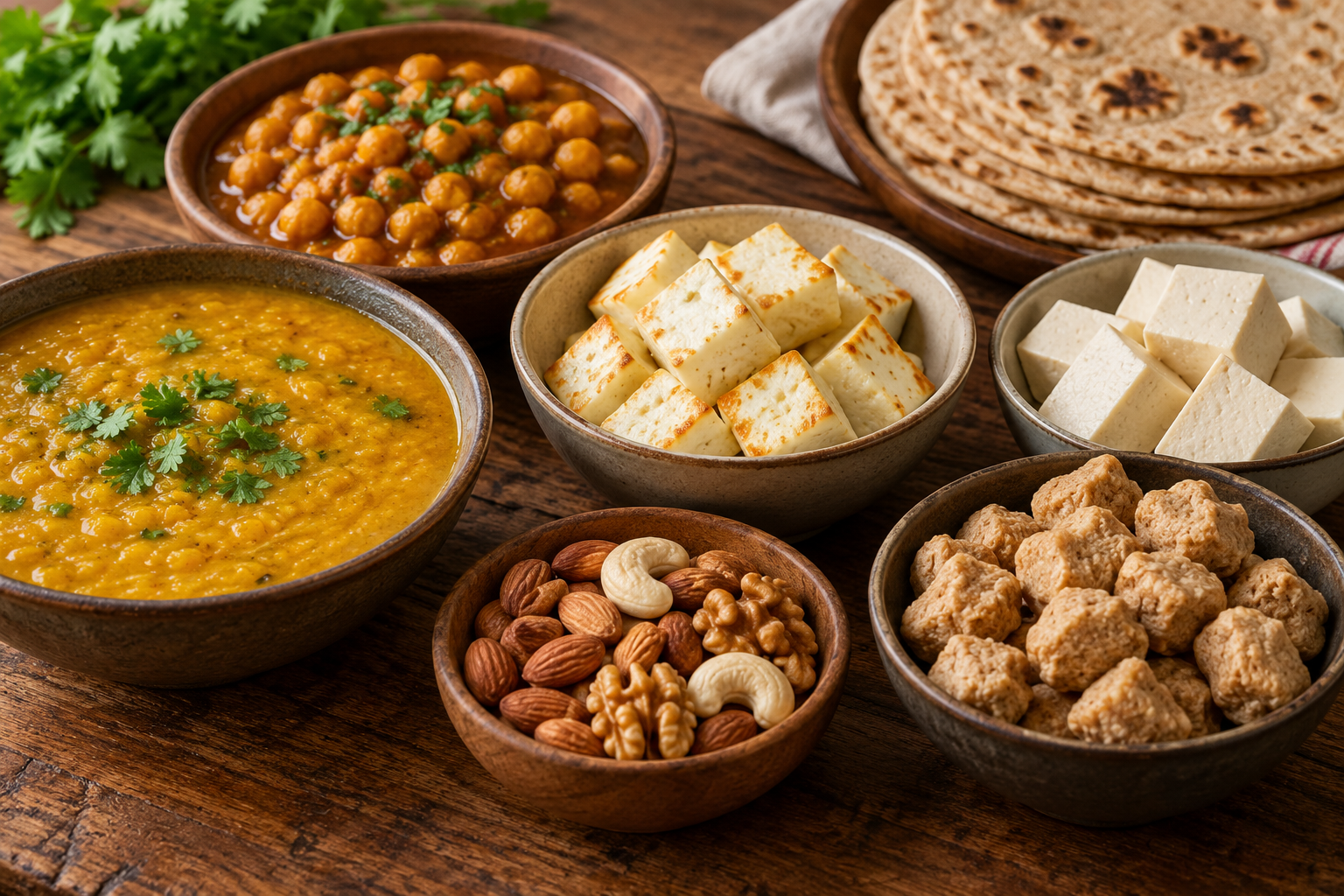
Vegetarian meals can provide enough protein with varied foods and sufficient total energy. You do not need to match two specific plant proteins at every bite. Include protein foods throughout the day and rotate choices.
Dal with rice or roti is familiar and useful. Chana with roti, rajma with rice, tofu with vegetables and noodles, or curd with a pulse-based cheela are other choices. Dairy, eggs and soy foods can add more protein if they fit your diet.
Roti and rice contain some protein, but a grain-heavy plate may not provide as much as a meal with dal, beans, tofu or paneer. Add a clear protein source to lunch and dinner. At breakfast, try besan cheela with curd, idli with sambar, or oats with milk and nuts.
Different plant foods contain different amino-acid profiles. Eating a variety of legumes, grains, nuts and seeds across the day helps cover needs. Soy foods and dairy are convenient options, but no single food is mandatory.
People who train regularly may need more protein than those who do not. Total daily intake, enough calories and strength training matter more than chasing a single post-workout food. See our gym food guide.
Vegetarian diets also need attention to iron and vitamin B12. Vegans usually need a reliable fortified B12 source or supplement. Read our iron guide and B12 guide.
ICMR-NIN Dietary Guidelines for Indians · USDA MyPlate: protein foods · High-protein Indian foods
This article provides general education and does not replace individual medical or dietetic advice.
← All articles