 ← Articles
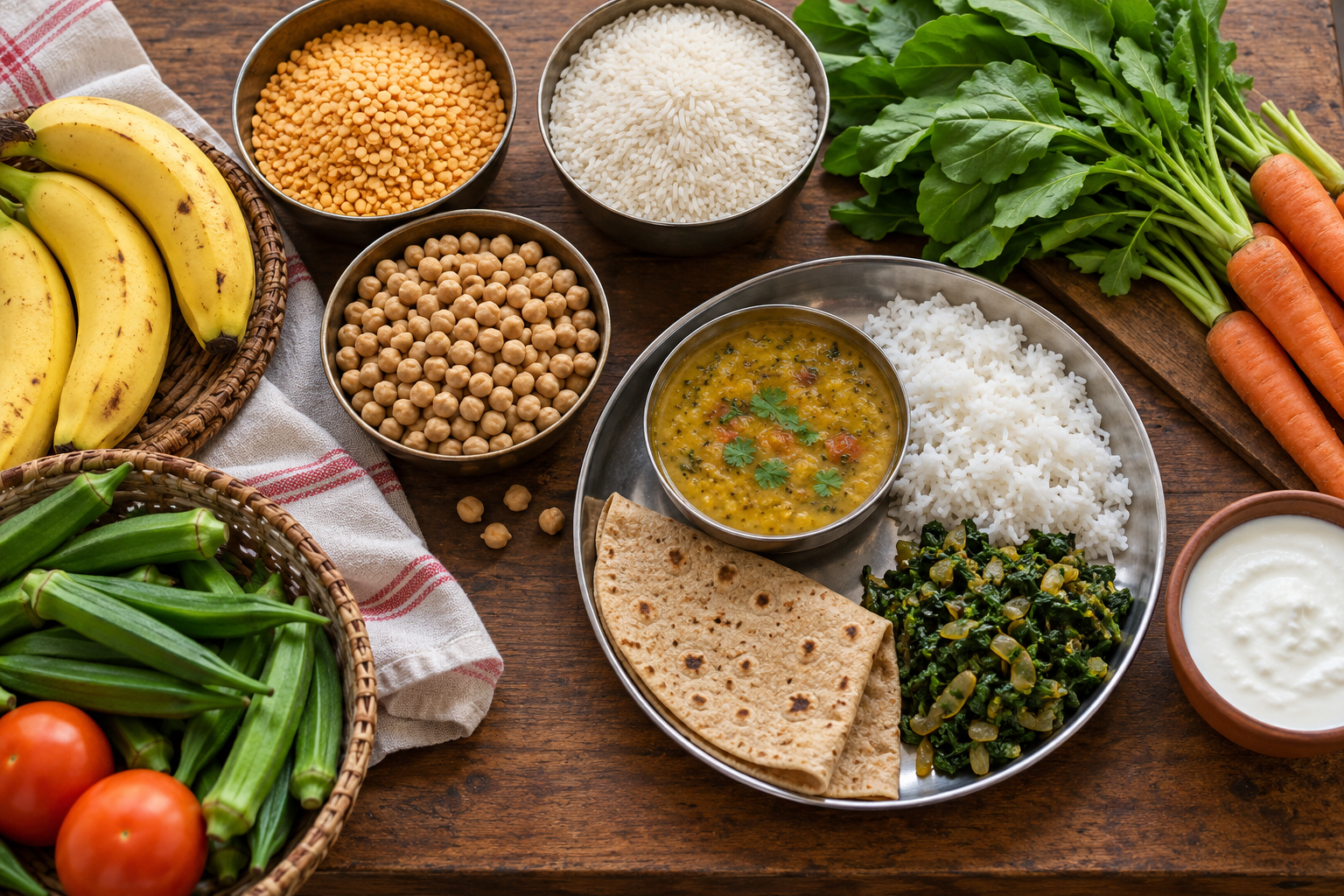
A healthy Indian diet can start with ordinary ingredients: dal, rice or roti, seasonal vegetables and fruit. You do not need imported “superfoods,” powders or a perfect weekly menu. Plan around local prices and the foods your household already enjoys.
Rice, wheat, millets or potatoes can provide the staple part of a meal. Add a pulse such as moong dal, masoor dal, chana or rajma for protein and fibre, then include a vegetable. For example, dal-rice with a cabbage sabzi or roti with chana and spinach is more varied than a grain alone. Milk, curd, eggs or soy can be useful where affordable and suitable.
Compare the cost per usable portion rather than judging by a food's reputation. Seasonal vegetables and fruit can be better value than out-of-season produce. Frozen or canned vegetables can also help when fresh options are costly; check for added salt or sugar. Use different colours and types over the week.
A pot of dal can become lunch with rice and dinner with roti. Cooked chickpeas can go into a curry, a salad or a snack. Chop vegetables for two meals, store cooked food safely in the refrigerator, and use leftovers promptly. Planning reduces both last-minute takeaway spending and food waste.
Choose one or two pulses, a staple grain, several vegetables, fruit and a protein option for the week. Compare unit prices, pack sizes and what your family will actually eat. A larger pack is only a bargain if you can store and use it. Spend first on a varied food basket before considering supplements.
Breakfast: vegetable poha with curd, or besan cheela with chutney. Lunch: rice, masoor dal and seasonal sabzi. Dinner: roti, chana or soy curry and cooked greens. Portions and choices should reflect age, activity and personal health needs.
ICMR-NIN Dietary Guidelines for Indians · WHO: healthy diet · Balanced Indian thali · Weekly vegetarian meal ideas
This article provides general education and does not replace individual medical or dietetic advice.
← All articles