 ← Articles
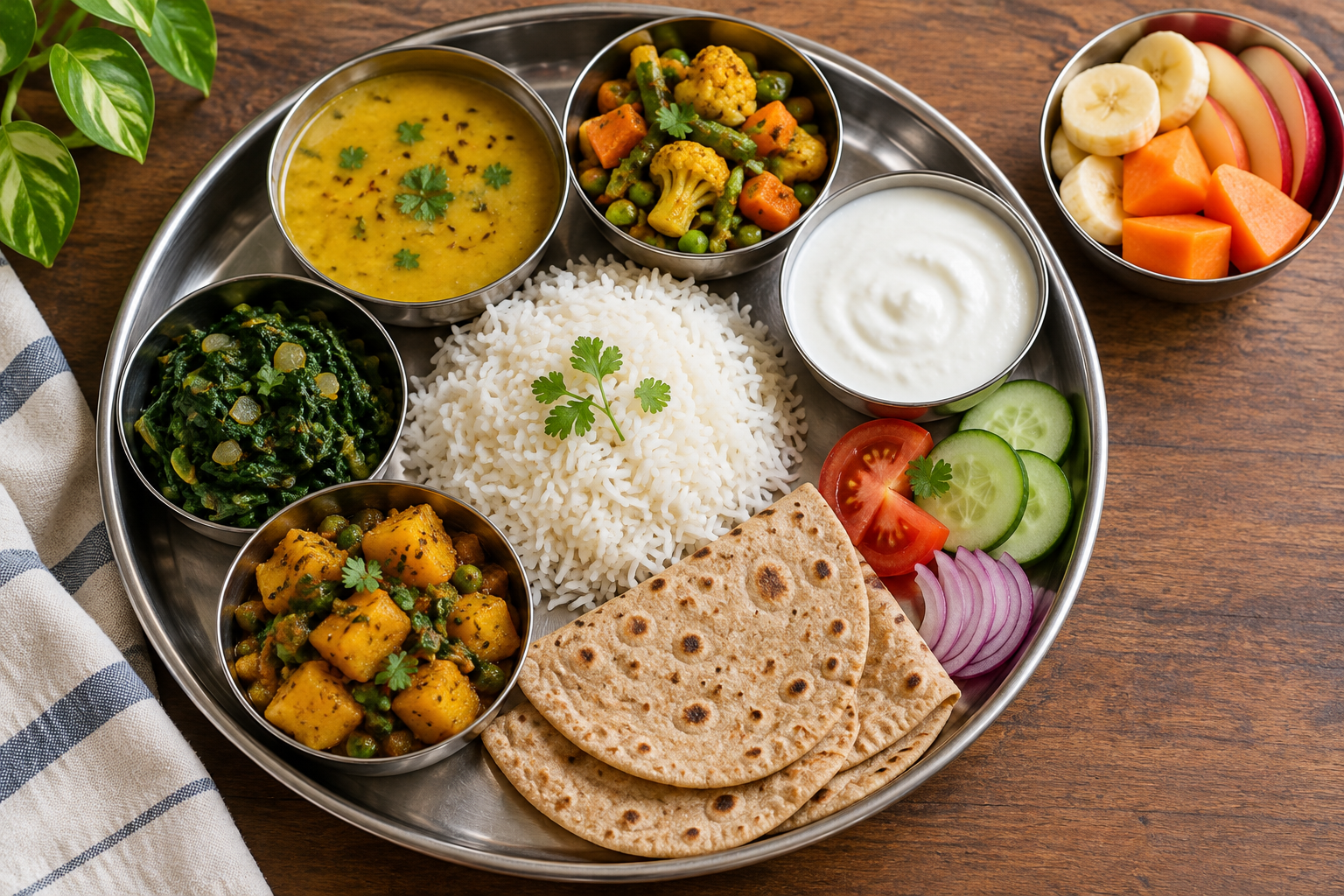
A balanced Indian thali does not require expensive ingredients or a rigid formula. Combine a staple, a protein food, vegetables and water; add curd or fruit when they suit you. Rotate foods across the week so meals stay varied.
Choose a sabzi, leafy greens, salad or cooked vegetables. Different colours and types provide different nutrients and fibre. A mix of cooked and raw vegetables is fine; wash raw produce thoroughly.
Dal, chana, rajma, soy, paneer, curd, eggs, fish and meat are options. A meal of only rice and pickle is less varied than rice with dal and vegetables. If you eat vegetarian food, use pulses or soy regularly alongside dairy or other protein foods you enjoy.
Roti, rice, millet, idli and potatoes provide energy. Whole-grain choices can add fibre, but white rice can still fit a healthy meal. Choose an amount that matches appetite and activity; you do not need to combine rice and roti at every meal.
Fruit, nuts, milk or curd can add variety over the day. Use cooking oil and ghee thoughtfully and keep heavily salted or sugary extras occasional. Water is a useful everyday drink. A sample lunch is roti, dal, beans sabzi, curd and a seasonal fruit later.
There is no universal plate size. Children, athletes, pregnant people and those with medical conditions have different needs. Use this as a starting pattern and seek tailored advice when needed.
ICMR-NIN Dietary Guidelines for Indians · WHO India: healthy diet · What is nutrition?
This article provides general education and does not replace individual medical or dietetic advice.
← All articles