 ← Articles
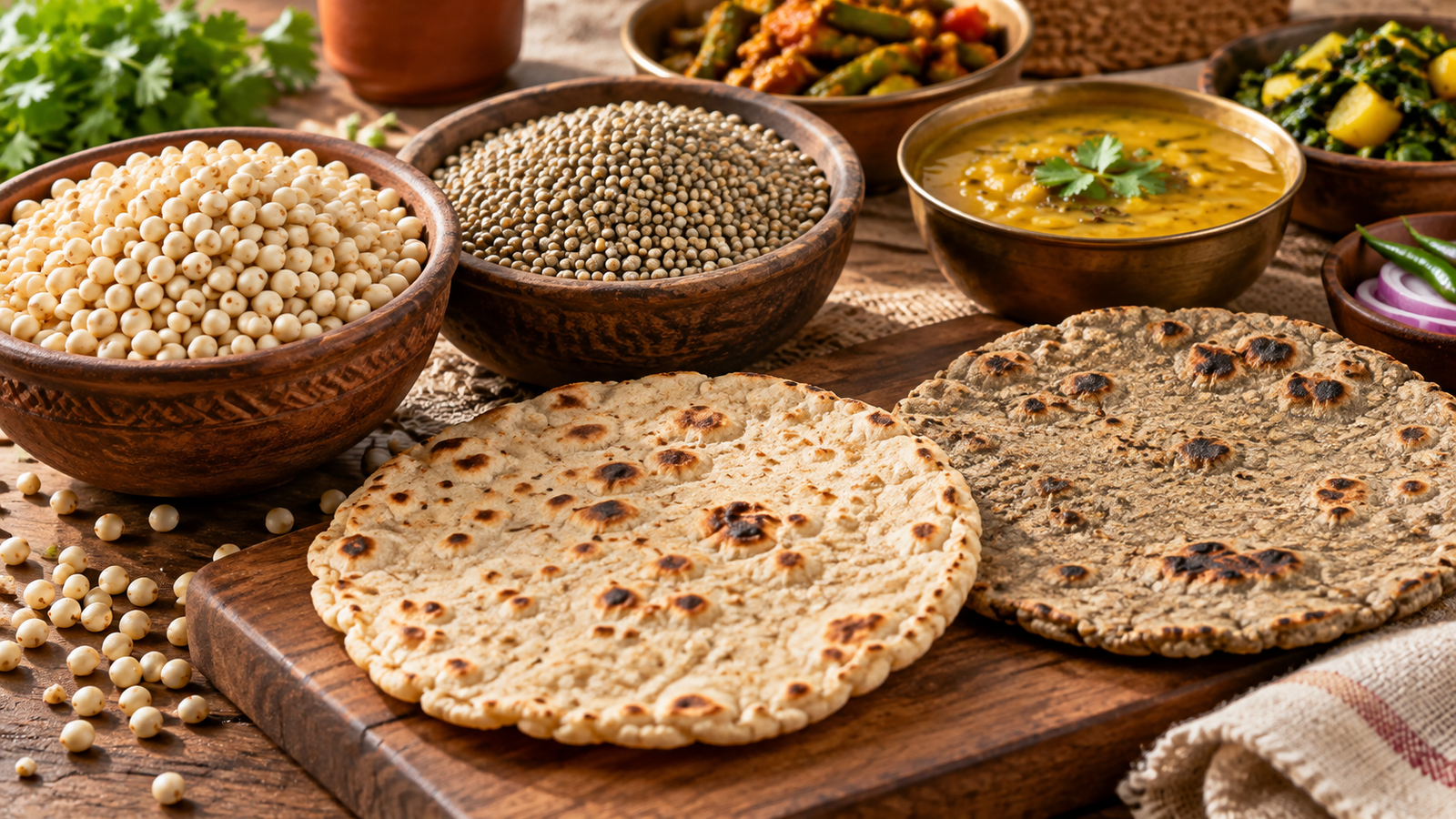
Jowar and bajra are traditional Indian millet grains used in rotis and other meals. Jowar is sorghum; bajra is pearl millet. Both offer variety alongside rice and wheat. The better choice is the one you enjoy, can buy regularly and can fit into a balanced meal.
Both are mainly carbohydrate foods and also provide some protein and fibre. Indian agricultural food tables report, per 100 g of dry grain, approximately 334 kcal, 10 g protein and 10 g dietary fibre for jowar, and 347 kcal, 11 g protein and 12 g dietary fibre for bajra. These are reference values, not the nutrition of a cooked roti: recipes, flour, water, oil and roti size change the numbers. Neither grain is a complete meal or a substitute for a protein-rich food.
Neither millet makes weight fall on its own. Portion size, added ghee or oil, side dishes and your overall eating pattern matter more than switching one grain for another. A satisfying plate could include one or two rotis according to appetite and energy needs, dal or another protein food, and plenty of vegetables. There is no need to force a millet you dislike.
Jowar and bajra still contain carbohydrate and can affect blood glucose. The response depends on portion, preparation and the whole meal. Pair either roti with dal, curd, tofu or another protein food and vegetables. If you monitor glucose or use diabetes medicine, work with your healthcare team on portions rather than assuming one grain is universally “diabetes safe.”
Try a jowar roti with dal and greens, or a bajra roti with sabzi and curd. Either grain can also be cooked into a grain bowl or mixed with other flours for a texture you prefer. Both are naturally gluten-free grains; people with coeliac disease should choose products verified against gluten cross-contact.
Choose by taste, price, freshness and how you cook. Buy manageable quantities of flour, store it in a cool dry place and follow safe storage advice on the packet. Rotating grains can make meals more varied, but a balanced plate matters more than finding a single “best” grain.
ICAR Indian Farming: millet nutrient tables · ICMR-NIN Dietary Guidelines for Indians · Guide to Indian millets · Balanced Indian thali
This article provides general education and does not replace individual medical or dietetic advice.
← All articles