 ← Articles
The best food during a fast depends on the rules you follow, the length of the fast and your health. If your tradition allows food and water, aim for satisfying meals rather than spending the day on sweets and fried snacks.
Eat a regular meal with a protein source, vegetables or fruit, and a grain or starchy food. Curd with fruit and nuts, or a balanced home meal, can be more sustaining than only tea and biscuits. Drink water if your fast permits it.
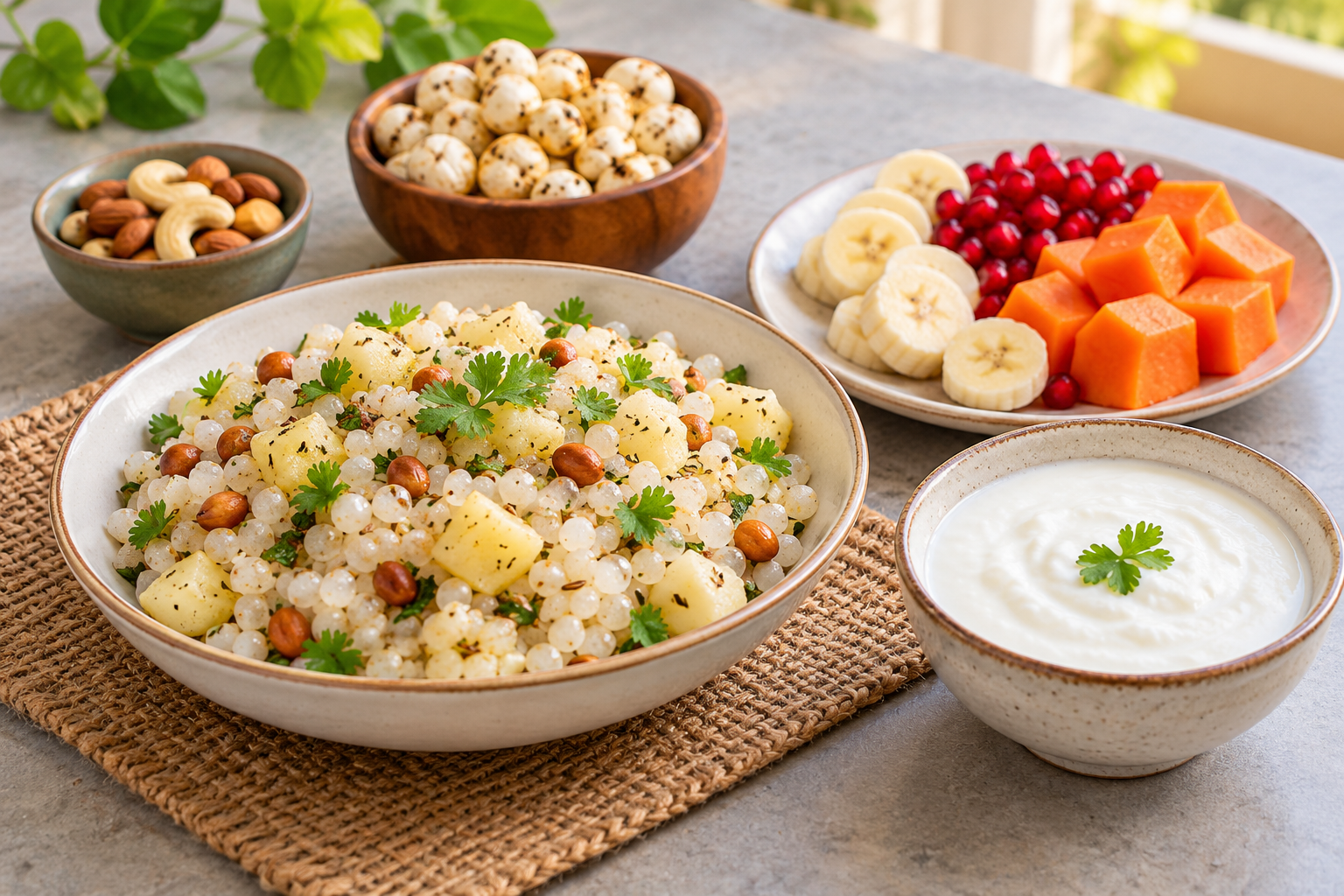
Depending on your tradition, options may include plain curd or milk, fruit, nuts, roasted makhana, sweet potato, and dishes made with kuttu, singhara, rajgira or sama rice. Combine foods where possible: for example, kuttu roti with curd and a vegetable, or fruit with curd and nuts. Sabudana provides mostly starch; add peanuts or curd to make the meal more varied.
If water is allowed, drink regularly, especially in hot weather. Unsweetened drinks can help. When the fast ends, begin with a comfortable portion of a normal balanced meal. Eating very quickly or using the fast as a reason for a very large feast may leave you uncomfortable.
People who are pregnant or breastfeeding, children, and those with diabetes, kidney disease, a history of disordered eating or medicines that require food should discuss fasting with a healthcare professional. In diabetes, changing meal timing can affect blood glucose and medicines. If you feel faint, confused or unwell, stop and seek medical help.
Religious fasting rules vary by community and household. Check what your observance permits; this guide offers meal ideas, not religious instructions. For portions and common vrat dishes, see our Navratri vrat food guide.
NIDDK: fasting and diabetes · ICMR-NIN Dietary Guidelines for Indians
This article provides general education and does not replace individual medical or dietetic advice.
← All articles