 ← Articles
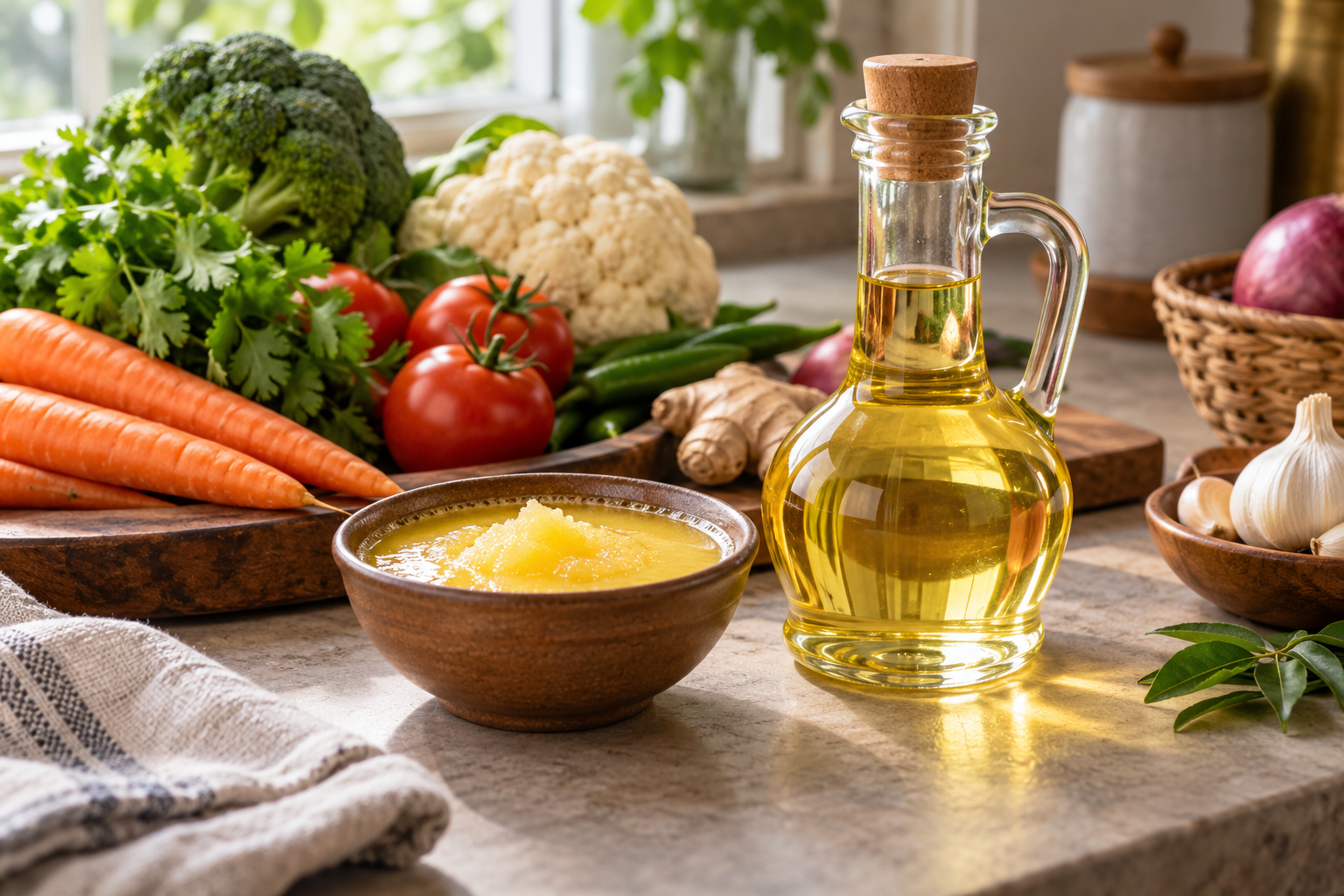
Ghee and cooking oil both add fat and energy to a meal. The choice depends on the type of fat, the amount you use and the rest of your diet. “Refined oil” is a processing label, not one single fat profile.
Ghee contains more saturated fat. Many liquid vegetable oils, such as soybean, sunflower, groundnut and mustard oil, contain more unsaturated fat, although their exact mix differs. Health guidance generally favours replacing some saturated fat with unsaturated fat. Ghee can still be used for flavour in a modest amount.
Refining changes how an oil is processed, but it does not automatically turn an oil into trans fat. Look at the oil type and its fatty-acid profile rather than relying only on “refined” or “cold pressed” marketing. Avoid vanaspati or partially hydrogenated fats. Do not repeatedly heat or reuse oil for deep frying.
For everyday cooking, use a reasonable amount of an appropriate liquid vegetable oil. A small spoon of ghee can add taste to dal or roti if you enjoy it. Measure rather than pour freely: even nutritious fats are energy dense. Nuts and seeds are other sources of unsaturated fat.
No single oil is a complete solution. Your overall meal pattern—vegetables, pulses, grains and protein foods—matters more than a brand of oil. People with high LDL cholesterol or heart disease should follow their clinician’s tailored advice, particularly on saturated fat.
WHO: healthy diet and fats · ICMR-NIN Dietary Guidelines for Indians · Ghee calories guide
This article provides general education and does not replace individual medical or dietetic advice.
← All articles