 ← Articles
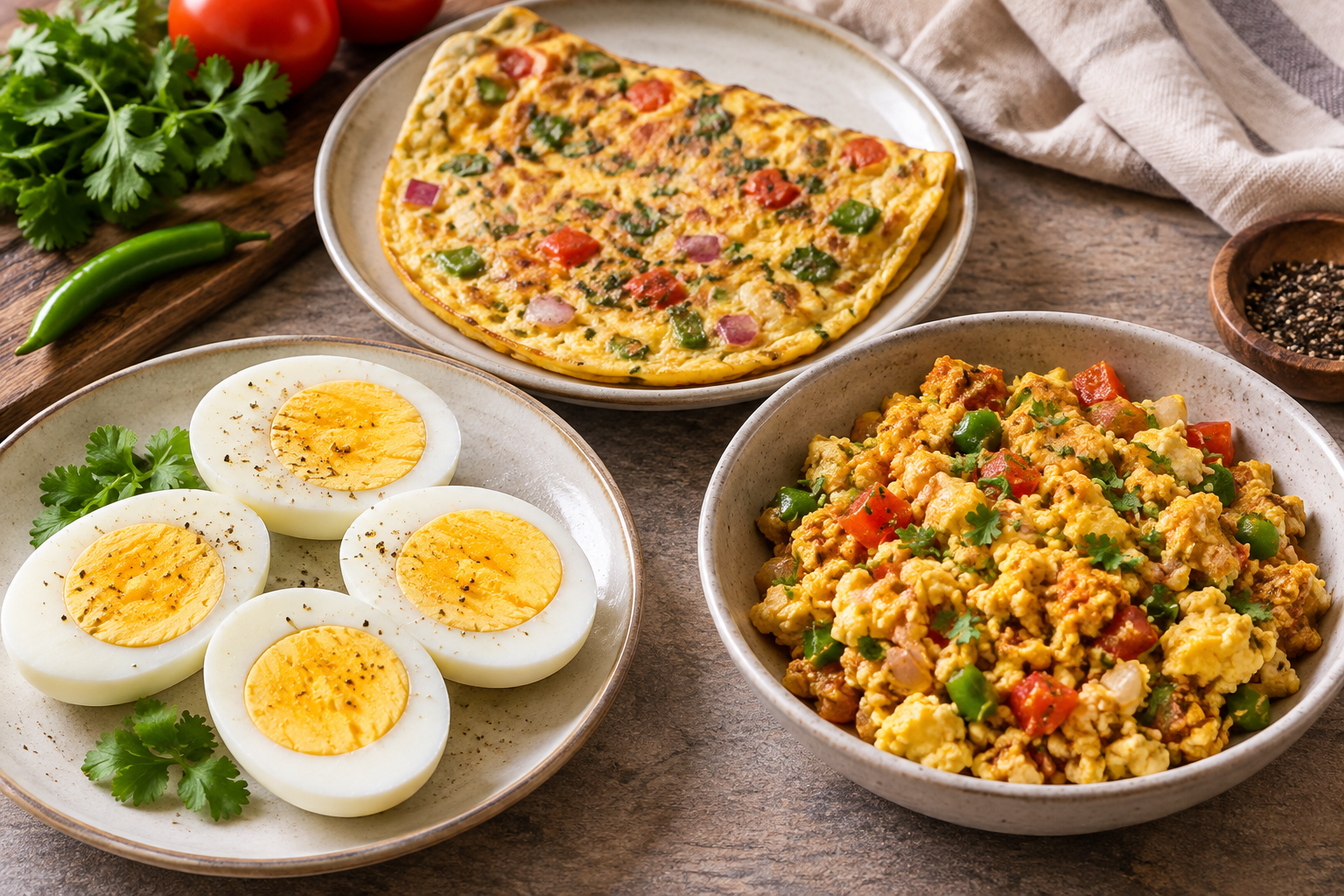
Boiled, folded or scrambled with masala: when you use the same number and size of eggs, the egg protein is roughly the same. The ingredients around them change the meal.
One large egg provides about 6 g of protein, so two provide approximately 12 g. Egg sizes differ; these are rounded estimates. A USDA recipe lists 6 g protein in a serving made with one large egg.
| Preparation | Eggs | Protein from eggs |
|---|---|---|
| Boiled eggs | 2 large | About 12 g |
| Omelette | 2 large | About 12 g |
| Egg bhurji | 2 large | About 12 g |
Protein from eggs only. Cheese, milk or other ingredients may add protein; oil and butter add calories.
Boiling needs no cooking oil. Pair eggs with fruit, vegetables or whole-grain toast. Boiled eggs do not have more protein than the same eggs made into bhurji.
A two-egg omelette has about 12 g of protein from the eggs. Add onion, tomato, spinach or capsicum. Milk or cheese can contribute protein, while oil, butter and cheese also affect calories.
Two eggs scrambled with onion, tomato, chilli and spices still give roughly 12 g of egg protein. Use a modest amount of oil if you want a lighter meal and serve with roti or vegetables.
Pick the preparation you enjoy. For more protein, add an egg or egg whites, or include another protein-rich food. Cook eggs until both white and yolk are firm; cook egg dishes thoroughly. See USDA egg safety guidance.
How much protein do you need? · Calories in Indian egg dishes
This article is educational information, not medical or nutrition advice.
← All articles